Peter Rood Memorial Community Garden
The Peter Rood Memorial Community Garden (previously known as the Community Garden at Holy Nativity) is an all-organic teaching garden, located on the grounds of Holy Nativity Church in Westchester. Food grown in the garden is donated to the needy, typically via Food Pantry LAX or Westside Food Bank. Organic vegetable gardening classes are occasionally offered for the general public.
The garden site includes vegetable plantings, a mini-orchard of dwarf fruit trees, several types of rainwater harvesting, on-site composting, and an adobe-and-cob wood-fired bread-and-pizza oven. The garden is maintained by a diverse team of volunteers who meet each week to tend and harvest.
The Garden has been expanded several times over the years, and now wraps around and between the church buildings. It is located on a public street corner with no gates; it is open to the public at all times of all days.
The garden has inspired many additional food-related activities.
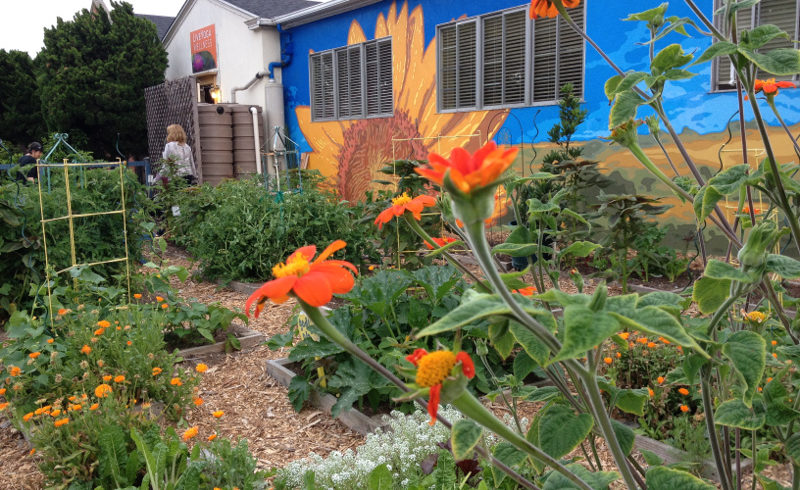
- Current photos of the Garden: #GardenatHN on Instagram
- Archive photos of the Garden: EnviroChangeMakers on Flickr
- Map of the Garden
History
In late 2007, the Environmental Change-Makers had been meeting at the Holy Nativity site for about two years. In teaching West LA about waste, Joanne had been repeating an odd “mantra”: David Holmgren’s Permaculture Principle “Obtain a Yield.”
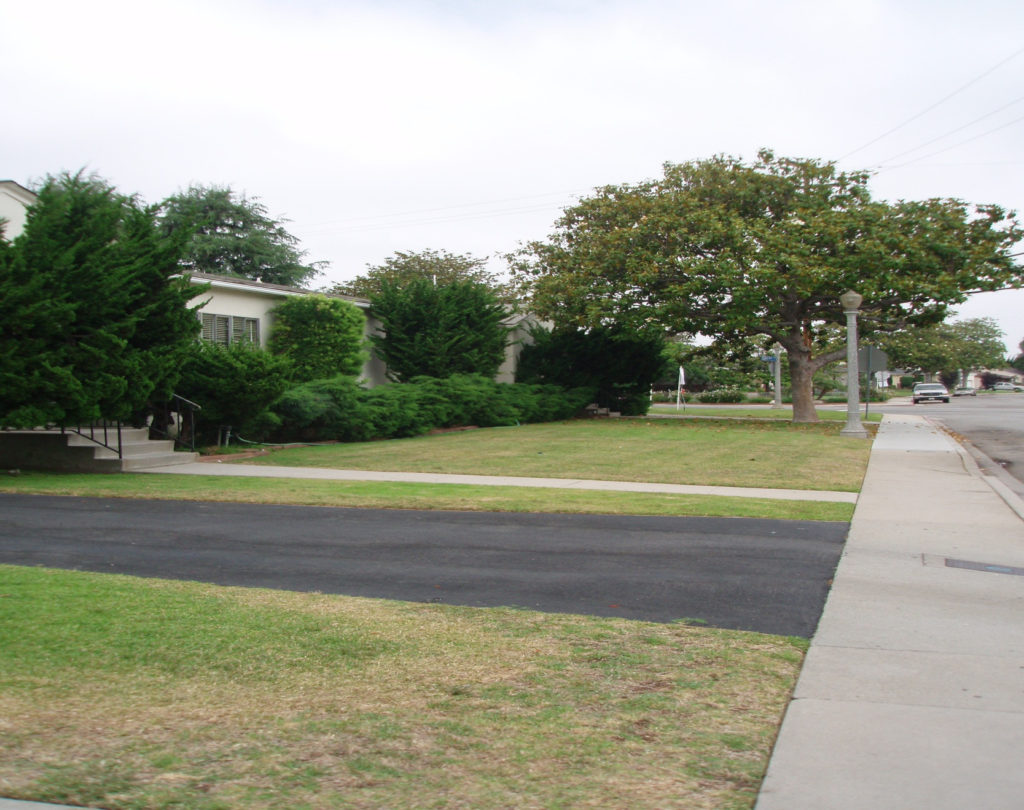
Peter Rood returned from a retreat with his church’s leadership circle and announced that Holy Nativity was going to tear up the side lawn and plant a food garden.
The garden groundbreaking was in January 2008, with an interfaith dedication ceremony that spring. By June 2008, we began harvesting, and the harvests continued — with the weekly pattern virtually unbroken — ever since.
Even through the COVID lockdown, the Garden continued to thrive, and harvest, and participate in a wide network of food distribution organizations.
The garden was expanded, season by season, over time.
- high-production vegetable gardens
- herb garden of culinary and medicinal plants
- mini-orchard of dwarf fruit trees
- rainwater harvesting (more info below)
- northend garden, mixed use
- cutting garden, to yield flowers for use on the wider site
- “working flowers” and perennial plants
- the labyrinth (now demolished)
- The Westchester Community Oven
- at one point, the Garden included a hutch of live bunnies!
- Additionally, the wider site, includes many works of art by Steve O’Loughlin
How we Grow
The entire Garden is a high-intensity, high-production garden. The Garden is located in Southern California, which means we have a year-round growing season; we can (and do) harvest every single week of the year.
Peter’s taste for art and design led to the beds in the main garden having a unique shape and layout. In the main, blue-fenced area of the garden, there are four groupings of growing beds, which we call “patterns.” The shapes of these are a simplified version of what you might find at a French chateau.
The vegetables are grown in-ground (not in raised beds, since those aren’t appropriate for our dry SoCal climate). The wooden frames serve merely to direct foot traffic and keep pedestrians on the pathways.
In early years, we used biointensive spacing inspired by the books of John Jeavons. The intensive plant spacing served several purposes: it squeezed the most productivity out of a relatively small section of land; it spaced plants as close together as possible without hampering their root development or bringing on pests and mildew; it spaced plants such that their mature foliage shaded the soil and reduced evaporation, maintaining steady soil moisture levels for the benefit of the soil organisms.
Rich, healthy, alive, organic garden soil is the heart of the Garden. We maintain on-site composting of all kitchen and garden waste. This means we trained the many groups which used the Holy Nativity site (in the early years that included coffee hour, yoga center, girl scouts, Welsh choir, cooking classes, Weight Watchers, Food Forward gleaners) how to use the compost operations.
The key to successful year-round harvesting here in Southern California is knowing what to plant when. We began with recommendations by DigitalSeed of San Diego, but have modified these over the years with our own experience growing in coastal Los Angeles.
In the early years, we followed a strict crop rotation, to help keep soil-borne pests and diseases in check, and to assist with soil fertility. After wrestling with climate-inappropriate East Coast and British rotation schemes, we developed our own. Our rotation was customized for Southern California’s year-round growing season. We developed a Vegetable Crop Rotation Wheel for use in our garden classes, and this planning tool is now available to the general public.
We have made many discoveries about yield, seasonality, urban agriculture, volunteers, and community. Joanne Poyourow has published several how-to garden guides about the lessons we learned in the Garden.
Rainwater Harvesting
There are four different types of rainwater harvesting demonstrated on the property.
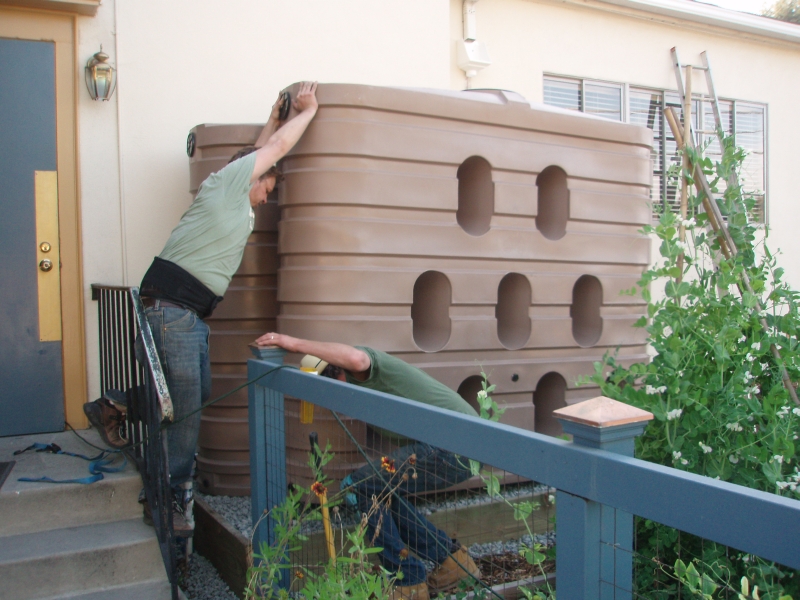
Two very visible above-ground rainwater tanks usually capture visitors’ attention. These hold 1,240 gallons of water, collect from one single facet of the campus roofs, and were expensive to install. All rainwater harvesting devices require ongoing maintenance. Our tanks have not been trouble-free, particularly in balancing the footing — something we’re still in the process of figuring out how best to cope with. Additionally, most gardeners are accustomed to city water pressure coming through a hose; with rainwater tanks the experience is vastly different. Thus the big discovery has been: rainwater harvesting causes us to re-think many aspects of our gardening practices.
The swale-and-berm combination in the mini-orchard was visually subtle, yet a highly-functional, low-tech installation. The only cost involved was sweat-labor, a peek at a Permaculture design book, and a good shovel. It was easy to maintain, with little needed (except when a film crew plowed through it). It did a great job of capturing and infiltrating rainwater and irrigation water, preventing these from being lost via the neighbors’ driveway.
A small, home-style rain barrel (about 55 gallons) was for a while installed in the inner courtyard. It was effective for collecting water for container plants.
Of all our rainwater harvesting techniques, our favorite was the rainwater harvesting garden. Four dwarf citrus trees were watered by the rain that fell on the roof of the room that was then a yoga center.
In 2019, the management of the garden shifted to the capable hands of Azita Banu. Azita kept the garden flourishing through the COVID pandemic and beyond. Azita continues to conduct weekly volunteer days and occasional classes.
In 2023, following Peter’s untimely passing, the Garden was renamed to the Peter Rood Memorial Community Garden.
The Garden is open to the general public 24/7/365 and most of it is not gated.
For more information about the Peter Rood Memorial Community Garden, please contact Azita through the office at Holy Nativity Parish, (310) 670-4777 or online here.